
HGS RESEARCH HIGHLIGHT – Three‐Dimensional Analysis of Heat Tracer Transport With High‐Resolution Subsurface Heterogeneity Characterization in a Complex Aquifer System
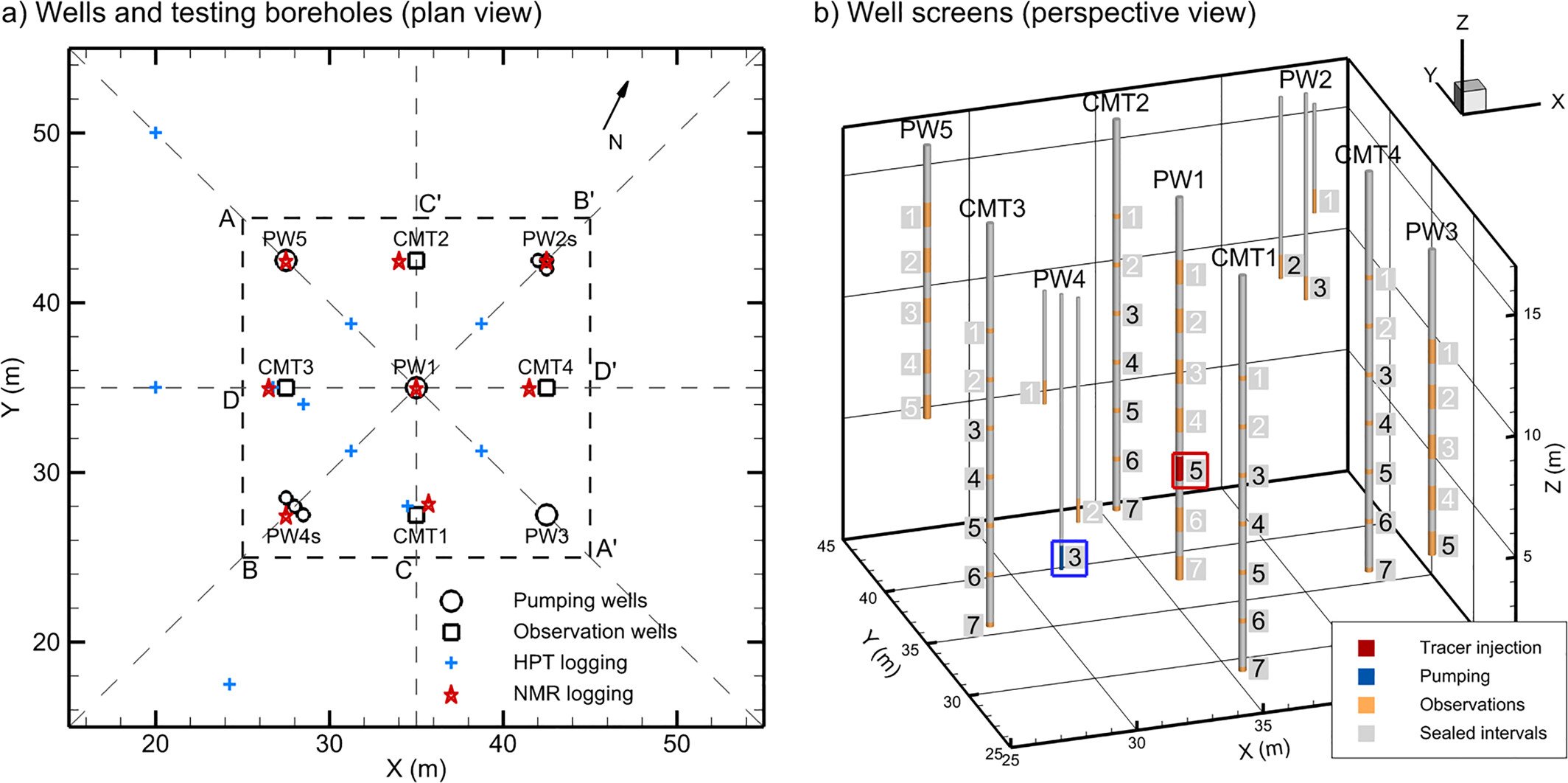
We're pleased to highlight this publication by Chenxi Wang and colleagues, co-authored by Aquanty's Steven Berg and Hyoun-Tae Hwang, which investigates how high-resolution characterization of subsurface heterogeneity can improve predictions of heat tracer transport in complex aquifer systems. The study leverages HydroGeoSphere (HGS) to simulate three-dimensional groundwater flow and heat transport, evaluating how different methods of representing hydraulic conductivity influence the ability to reproduce observed tracer behaviour in highly heterogeneous glaciofluvial deposits.
HGS RESEARCH HIGHLIGHT – Modeling a geologically complex volcanic watershed for integrated water resources management in Mt. Fuji, Japan
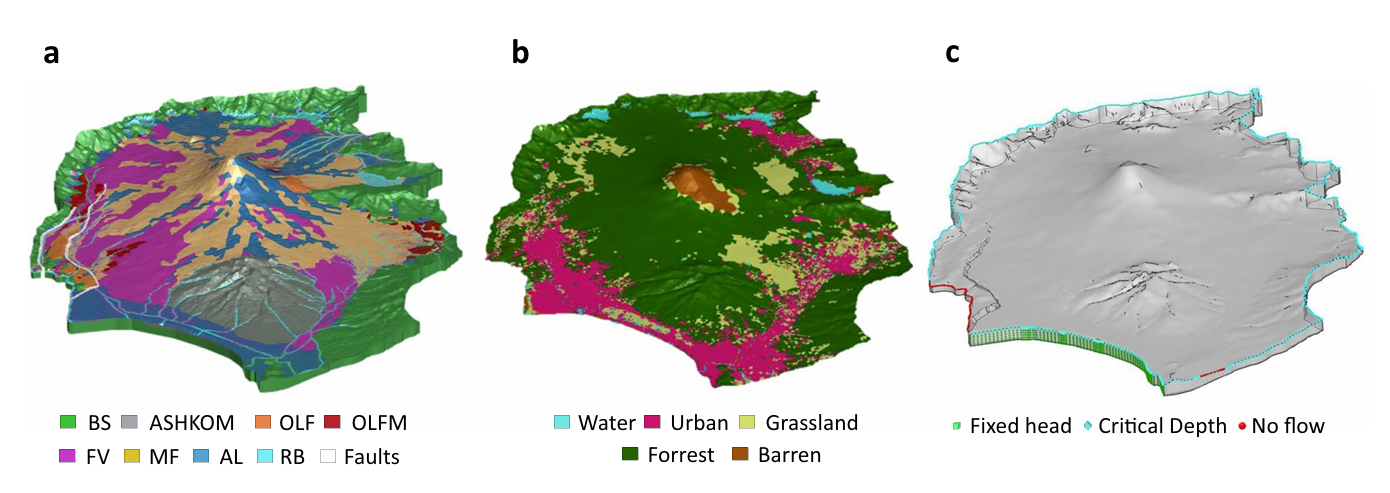
This publication presents a three-dimensional geological and integrated hydrological modelling dataset developed for the Mt. Fuji volcanic watershed in Japan. This study leverages HydroGeoSphere (HGS) to simulate coupled surface–subsurface flow and transport processes in a geologically complex volcanic catchment, addressing long-standing challenges in representing groundwater flow pathways and hydrologic interactions in structurally heterogeneous mountain environments. The resulting dataset provides a physically consistent modelling framework to support interdisciplinary water resources research and scenario-based hydrologic simulations.
HGS RESEARCH HIGHLIGHT – Effects of Creek Topology on Salinization of Coastal Marsh Due To Storm Surges
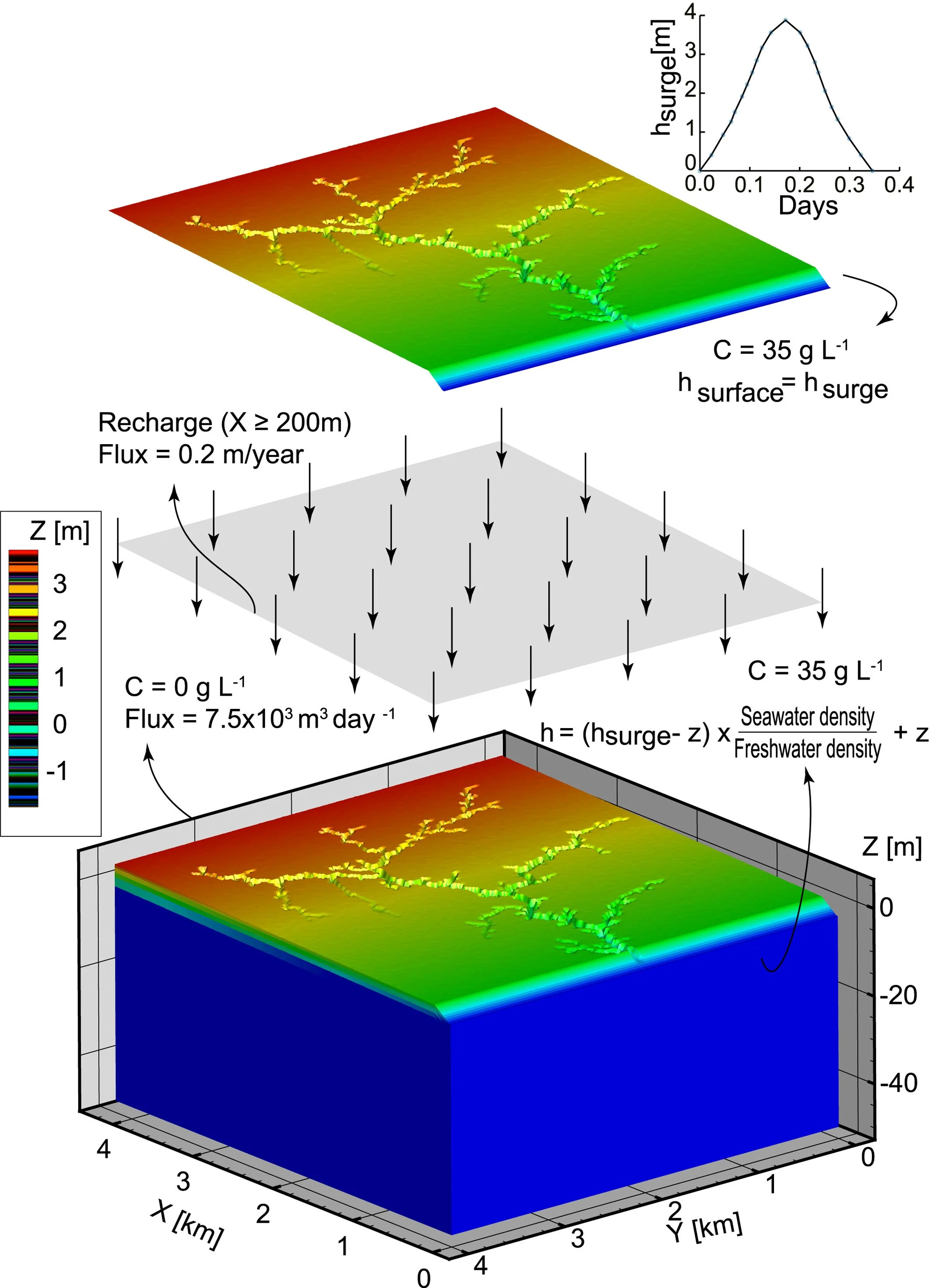
We’re pleased to highlight this publication, co-authored by Shuangshuang Yu and colleagues, which investigates how creek network topology influences storm-surge-driven salinization in coastal marsh systems. This study leverages HydroGeoSphere (HGS) to simulate coupled surface–subsurface flow and salt transport processes under variable-density conditions, addressing long-standing challenges in understanding how geomorphology controls vertical saltwater intrusion and recovery in marsh environments.
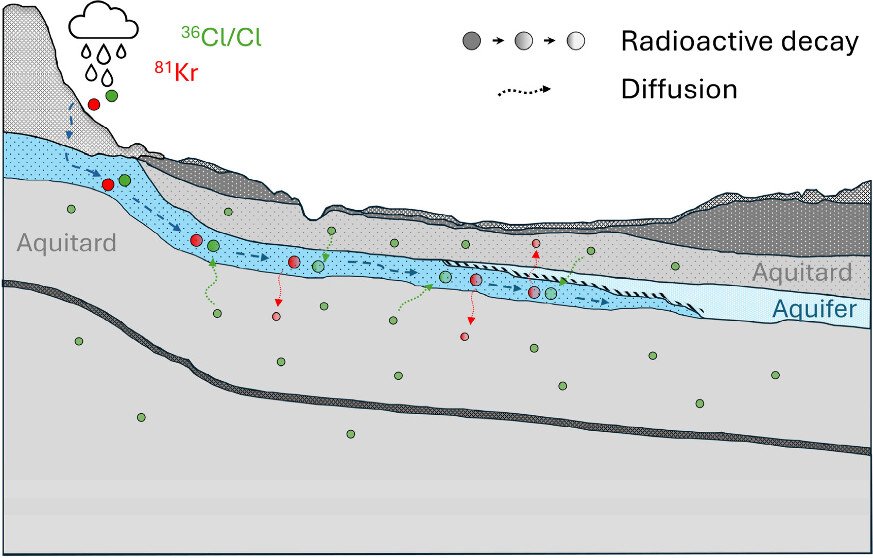
HGS RESEARCH HIGHLIGHT – Diffusion-Controlled Solute and Isotope Transport in the Milk River Aquifer System, Alberta, Canada: Implications for Dating Old Groundwater
We’re pleased to highlight this recent publication by Stephanie L. Musy and colleagues, which investigates how diffusion-controlled solute transport influences groundwater age interpretations in the Milk River Aquifer (MRA), a transboundary aquifer system spanning southern Alberta and northern Montana. The study combines multiple environmental tracers, including krypton-81 (^81Kr), chlorine-36 (^36Cl), stable chlorine isotopes (^37Cl/^35Cl), and radiocarbon (^14C), with HydroGeoSphere (HGS) simulations to better understand groundwater residence times and the processes controlling tracer distributions in old groundwater systems.
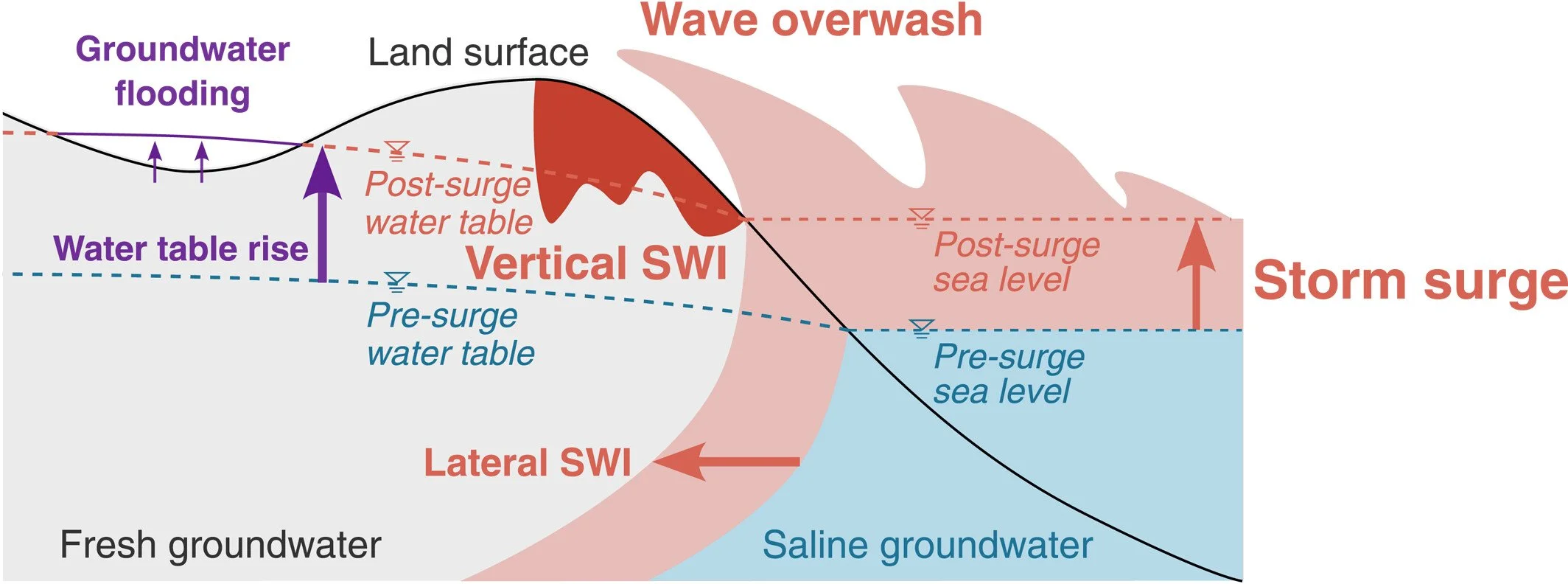
HGS RESEARCH HIGHLIGHT – Climate Change Alters Post-Surge Recovery of Coastal Aquifers
This publication co-authored by Satoshi Tajima, René Therrien and Philip Brunner investigates how climate change influences the recovery of coastal aquifers following storm surge events. This study leverages HydroGeoSphere (HGS) to simulate coupled groundwater flow and variable-density salt transport, addressing long-standing challenges in understanding how coastal aquifers respond to storm-driven seawater intrusion and how recovery dynamics may change under future climatic conditions.
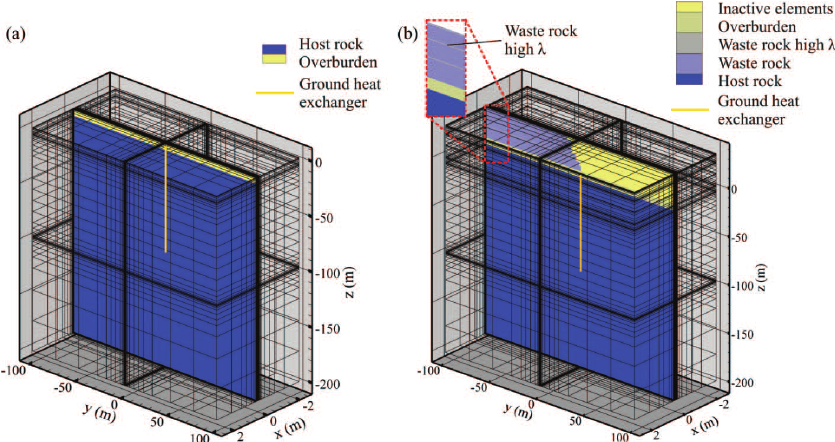
HGS RESEARCH HIGHLIGHT – Numerical simulation of geothermal energy transfer beneath exothermic waste rock piles
This publication, co-authored by Jasmin Raymond, René Therrien, Louis Gosselin, and René Lefebvre, which investigates how geothermal energy can be harnessed beneath exothermic waste rock piles to improve the performance of ground-coupled heat pump systems. This study leverages HydroGeoSphere (HGS) to simulate coupled subsurface fluid flow and heat transfer, addressing long-standing challenges in quantifying how enhanced subsurface temperatures generated by sulfide mineral oxidation can reduce the required length and number of ground heat exchangers.
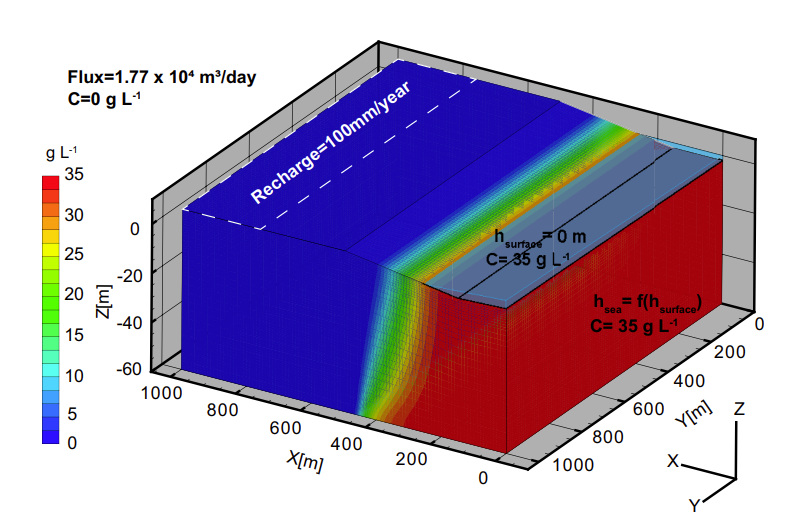
HGS RESEARCH HIGHLIGHT – Saltwater Circulation Driven by Shoreline Curvature in Coastal Aquifers
This publication co-authored by Xuan Yu, Lanxuan He, Rongjiang Yao, Zexuan Xu, George Kourakos, Jie Yang, and Franklin W. Schwartz, which investigates how shoreline curvature influences saltwater circulation, freshwater–saltwater mixing, and submarine groundwater discharge (SGD) in coastal aquifers. This study leverages HydroGeoSphere (HGS) to perform fully three-dimensional, variable-density groundwater flow and salt transport simulations, addressing long-standing limitations of two-dimensional coastal aquifer models that neglect along-shore and lateral flow processes.
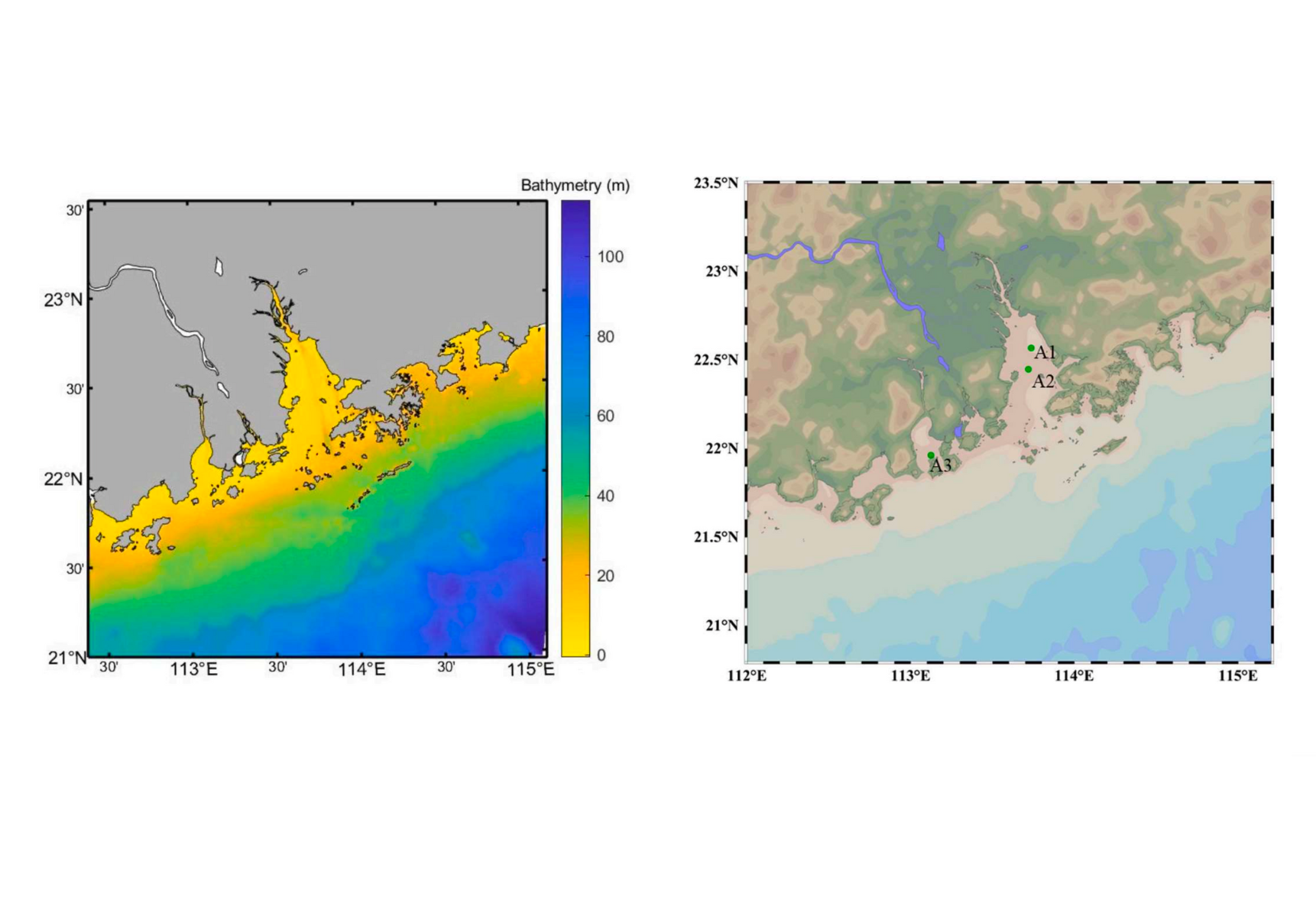
HGS RESEARCH HIGHLIGHT – Modeling the water use associated with energy consumption changes on saltwater intrusion in the Pearl River estuary, China
This research investigates how increased energy consumption and associated changes in water use impact saltwater intrusion in the Pearl River Estuary— one of China's most economically vital and environmentally vulnerable regions.

Staff Research Highlight - Steady-state density-driven flow and transport: Pseudo-transient parameter continuation
Co-authored by Aquanty’s senior scientist, Hyoun-Tae Hwang, this research presents a new numerical approach for efficiently solving steady-state density-driven flow and transport equations— an important challenge in groundwater modelling, particularly for coastal aquifers affected by seawater intrusion. The research introduces a hybrid technique called pseudo-transient parameter continuation (PTPC), which combines the robustness of pseudo-transient continuation (PTC) methods with the computational efficiency of parameter continuation (PC) strategies.
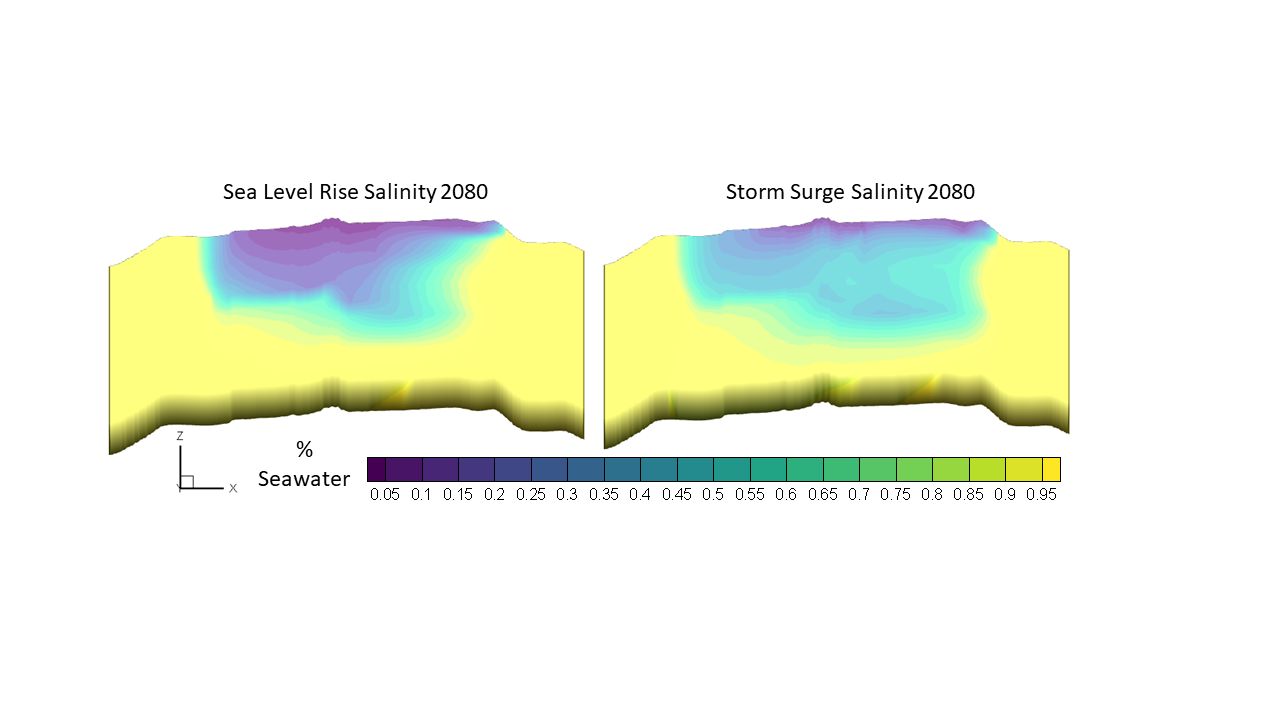
HGS RESEARCH HIGHLIGHT – A Comparison of Sea-level Rise and Storm-Surge Overwash Effects on Groundwater Salinity of a Barrier Island
In this research highlight, researchers explored the impacts of storm surge overwash and sea-level rise on groundwater salinization at Assateague Island, a low-lying barrier island on the U.S. mid-Atlantic coast. The study used HydroGeoSphere (HGS) to simulate the coupled surface and subsurface flow processes that influence the island’s aquifer system. By modelling future sea-level rise and storm-surge events, the researchers aimed to better understand the long-term effects of climate change on groundwater resources, particularly the vulnerability of freshwater lenses to salinization.