
HGS RESEARCH HIGHLIGHT – Modeling the water use associated with energy consumption changes on saltwater intrusion in the Pearl River estuary, China

Chen, Y., Xu, Z., Dong, Q., Fan, W., & Yang, Z. (2024). Modeling the water use associated with energy consumption changes on saltwater intrusion in the Pearl River estuary, China. In Applied Energy (Vol. 372, p. 123755). Elsevier BV. https://doi.org/10.1016/j.apenergy.2024.123755
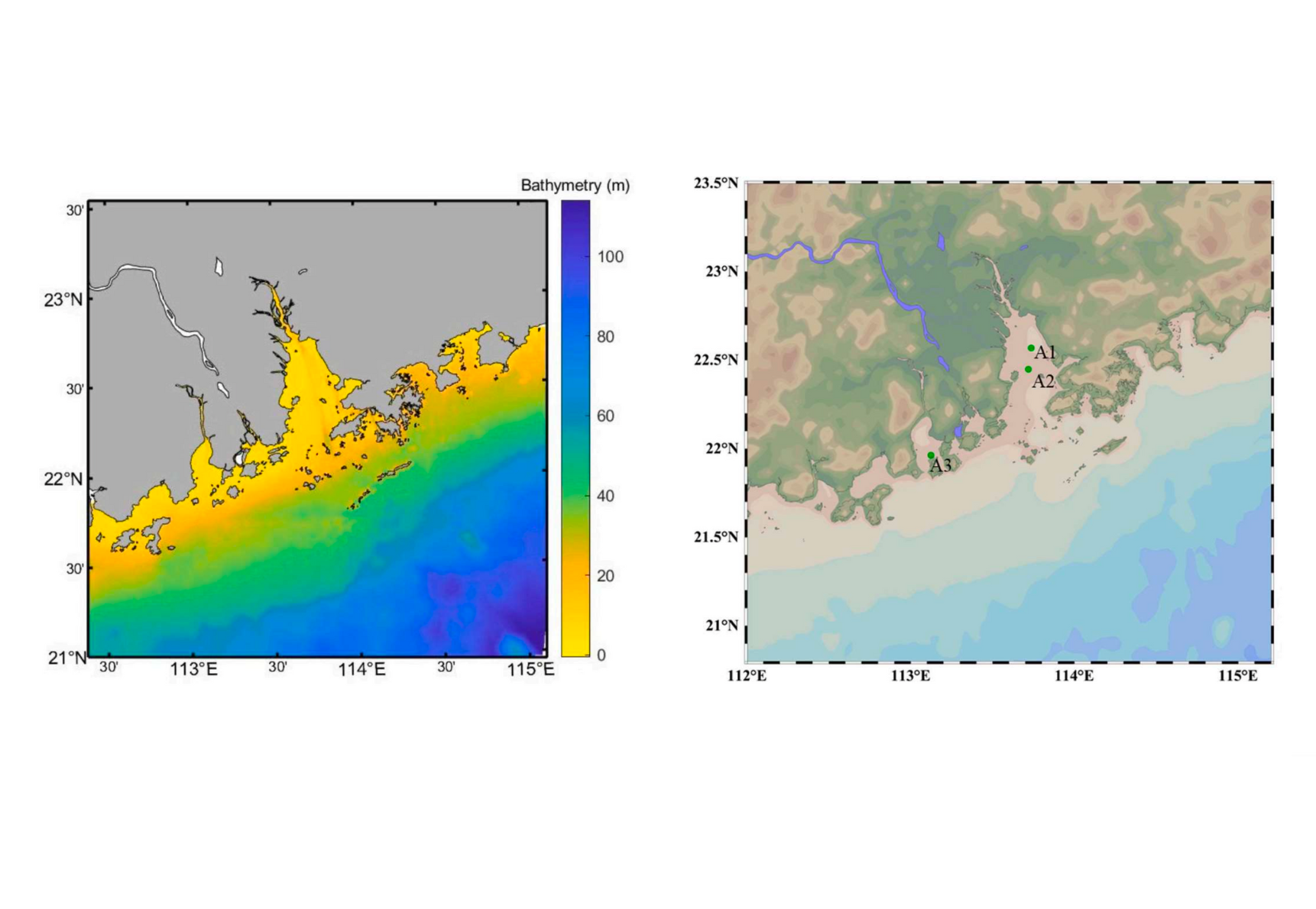
Fig. 1. Study area of Pearl River Estuary (left), and location of stations for FVCOM model validation (right).
This research investigates how increased energy consumption and associated changes in water use impact saltwater intrusion in the Pearl River Estuary— one of China's most economically vital and environmentally vulnerable regions. Rapid urbanization and industrial development in estuarine zones can significantly alter freshwater availability and hydrodynamic conditions, increasing the risk of saltwater intrusion into water supply systems. This study provides a novel perspective by linking energy consumption to hydrologic changes and their downstream effects on salinity levels in estuarine environments.
Researchers developed a three-part modelling framework to explore this relationship. First, they used a k-nearest neighbour (kNN) model to estimate runoff in the Humen Channel of the Pearl River Estuary based on precipitation and sectoral energy consumption data from 2019 to 2020. This step revealed a strong positive correlation between energy use and runoff, particularly during the wet season, suggesting that energy-intensive activities influence water supply dynamics. Second, they employed the Finite Volume Community Ocean Model (FVCOM) to simulate salinity distributions under various water use and precipitation scenarios projected for 2030–2031 and 2060–2061. Finally, they evaluated how different sectoral energy consumption patterns affected the number of days when salinity levels exceeded acceptable thresholds.
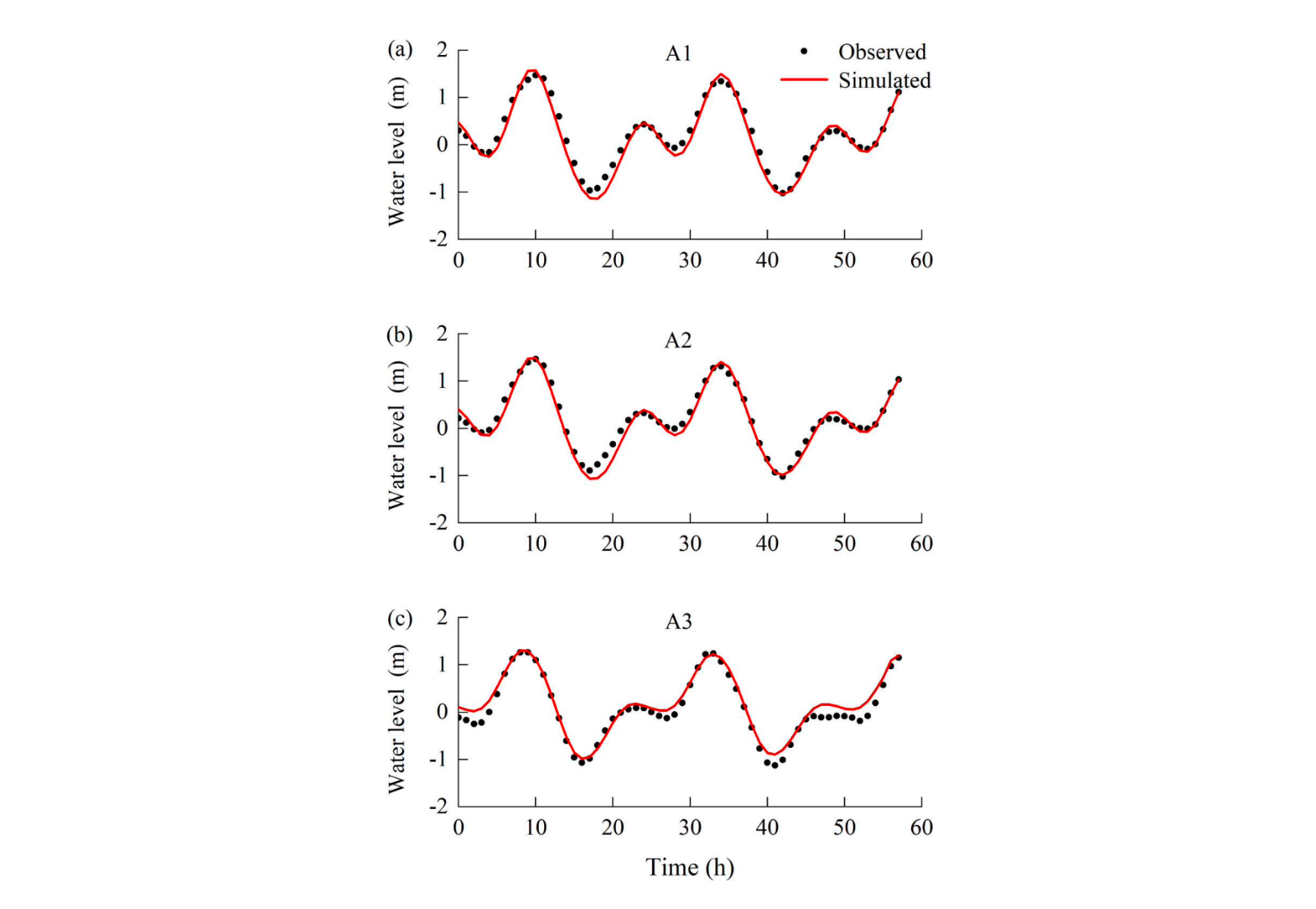
Fig. 3. Comparison between simulated and observed data of water level in different stations.
The modelling results demonstrated pronounced seasonal variability in salinity levels, with significant exceedances during low-flow periods. Across the three future scenarios, a total of 654 days were projected to have salinity levels above drinking water standards in the downstream portion of the Humen Channel. These exceedances were linked to reduced runoff caused by high water demand from energy-consuming sectors and altered precipitation patterns. The findings emphasize the need for integrated water-energy management strategies in estuarine regions, where hydrologic responses to energy consumption patterns can have profound implications for freshwater availability and water quality.
By simulating the coupled effects of water use and hydrologic change on saltwater intrusion, this study highlights the hidden vulnerabilities introduced by the intersection of socio-economic development and climate variability. The results provide valuable insights for policymakers and planners working to ensure water security in fast-developing coastal zones under future climate and energy demand scenarios.
In support of this integrated modelling approach, HydroGeoSphere (HGS) was used in earlier stages of the study to help understand the impact of mega-tidal events and surface flooding on saltwater intrusion dynamics. HGS’s ability to simulate surface-subsurface interactions and density-dependent flow provided critical insights into the mechanisms driving salinity migration into coastal aquifers. While the final saltwater intrusion scenarios were modelled using FVCOM, HGS informed the conceptual understanding of how subsurface processes contribute to vulnerability in coastal groundwater systems. This application underscores the importance of advanced, physics-based modelling tools like HGS in capturing the full complexity of groundwater–surface water interactions in estuarine environments.
Abstract:
The intrusion of saline tide into estuaries is one of the major environmental issues impedding the regional development of the Pearl River Estuary, which has been exacerbated by increasing water use associated with energy consumption in the estuary areas. However, the relationship among water use, energy consumption and saltwater intrusion remains ambiguous. Firstly, this paper established a k-nearest neighbor model that identified the correlation between inputs of precipitation and sectoral energy consumption and output of runoff in the Humen Channel as part of the Pearl River Estuary during 2019–2020. Then, the Finite–Volume Community Ocean Model (FVCOM) was employed to explore the process-based mechanism between runoff and salinity via three scenarios simulated for the periods 2030–2031 and 2060–2061 with different water use and precipitation levels. Finally, the impacts of sectoral energy consumption on saltwater intrusion under the different scenarios were analyzed. The results showed that the increase of the energy consumption was positively correlated to runoff, especially in the wet season of Humen Channel. The monthly average salinity exhibited remarkable seasonal variations with similar trends under three scenarios. Totally 654 days with salinity exceeding the standard were projected to take place in the downstream of Humen Channel during the simulation period.