
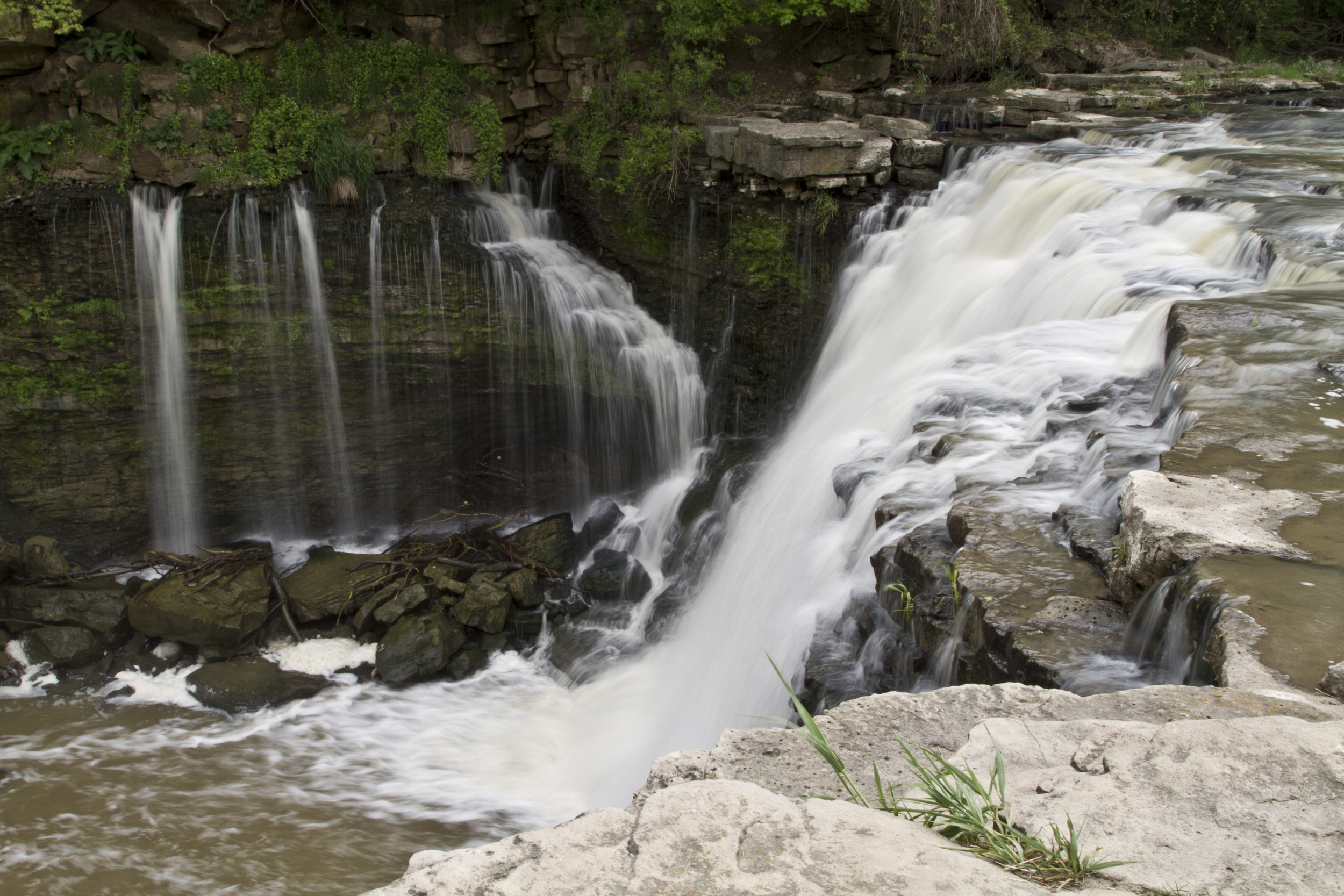

HGS RESEARCH HIGHLIGHT – Estimating Anthropogenic Effects on a Highly-Controlled Basin with an Integrated Surface-Subsurface Model
Our ongoing research with partners at the Korea Institute of Geoscience and Mineral Resources has led to a new publication. This paper seeks to quantify the impacts of water management practices (e.g. groundwater pumping, dam and weir operations, etc.) on the surface and groundwater system of the Geum River Basin, South Korea.
The results indicate that the water budget of the Geum River Basin (GRB) is typically balanced or shows a slight surplus (resulting in GW recharge). However, water deficits were frequently simulated during the dry season, and groundwater seepage along the rivers within the basin was an important water source component that can sustain environ-mental flow under severe water deficit conditions.
"Athabasca River Basin High-Res Modelling of the Impact of Climate Change" - Webinar hosted by COSIA
On September 16th, 2021 Aquanty's senior scientist Hyoun-Tae Hwang delivered a webinar discussing our recent work in modelling the impacts of climate change in the Athabasca River Basin using HydroGeoSphere. We would like to thank Canada's Oil Sands Innovation Alliance (COSIA) for the opportunity to present this most recent research, which follows on several years of partnerships to model the ARB in high-resolution using HydroGeoSphere, Aquanty’s cutting edge integrated hydrologic modeling platform.
HGS RESEARCH HIGHLIGHT – Integrated modelling to assess climate change impacts on groundwater and surface water in the Great Lakes Basin using diverse climate forcing
HydroGeoSphere is an excellent tool for evaluating climate change impacts to integrated hydrologic systems, since HGS can be effectively coupled with climate forecasting simulators like the Weather Research and Forecasting (WRF) model, the Community Climate System Model (CCSM) and the Canadian Regional Climate Model (CRCM). HydroGeoSphere accounts for water dynamics in the atmosphere, ground surface and subsurface in a seamless manner and thus is the best modeling tool for evaluating the impact and risk associated with climate change on water resources.
HGS RESEARCH HIGHLIGHT – Development of an integrated numerical flow model in the Prairie Environment
A recent publication by researchers at the University of Regina uses HydroGeoSphere to investigate the impact of climate variability and different groundwater withdrawal scenarios on groundwater levels in the Leech Lake aquifer. This paper provides an excellent introduction to the use of HGS in semi-arid prairie regions, making use of the built-in evapotransporation and snowmelt processes to estimate overall recharge rates under various climate scenarios (including extreme drought).
HGS RESEARCH HIGHLIGHT – Fully Coupled Surface–Subsurface Hydrological Modeling to Optimize Ancient Water Harvesting Techniques
We’re so proud that an entire chapter in the recently published “Handbook of Water Harvesting and Conservation: Case Studies and Application Examples” is dedicated to the modeling of ancient water harvesting techniques using HydroGeoSphere. In this chapter HGS was used to evaluate and optimize rain harvesting techniques across four case studies. Two of these case studies were from Chile, while the other two were in Ethiopia and Niger. The Chilean case studies evaluated the effectiveness of infiltration trenches (zanjas) in reducing surface runoff losses, promote recovery of natural vegetation and reduce land degradation. “In Ethiopia, the model was used to evaluate and optimize conservation practices with broad and narrow permanent beds, which are modified versions of locally called terwah and derdero systems.” And in Niger HydroGeoSphere models were used to evaluate several water harvesting techniques “includ[ing] scarification, zaï pits, and microcatchments like semi-circular or half-moon bunds (demi lunes)”.
HGS RESEARCH HIGHLIGHT – Hydraulic tomography analysis of municipal-well operation data with geology-based groundwater models
The study highlighted this week is focused on the estimation of aquifer parameters (e.g. hydraulic conductivity and specific storage) through inverse modeling of water-level data from observation wells collected during municipal well operations. The data is tested using four different conceptual geological models in HydroGeoSphere coupled to PEST, and the results indicate that this is a viable method of estimating reliable parameter values using existing data sets (providing a valuable new dimension to data collected during municipal well operations).
HGS RESEARCH HIGHLIGHT - Simulating Climate Change Impacts on Surface Water Resources within a Lake Affected Region using Regional Climate Projections
This study aims to assess the impact of climate change on water resources in a large watershed within the Laurentian Great Lakes region, using the fully‐integrated surface‐subsurface model HydroGeoSphere. The hydrologic model is forced with an ensemble of high‐resolution climate projections from the Weather Research and Forecasting model (WRF). The latter has been extended with an interactive lake model (FLake) to capture the effect of the Great Lakes on the regional climate. The WRF ensemble encompasses two different moist physics configurations at resolutions of 90km, 30km, and 10km, as well as four different initial and boundary conditions, so as to control for natural climate variability. The integrated hydrologic model is run with a representative seasonal cycle, which effectively controls natural climate variability, while remaining computationally tractable with a large integrated model.
HGS RESEARCH HIGHLIGHT - Integrating hydrological modelling, data assimilation and cloud computing for real-time management of water resources
Online data acquisition, data assimilation and integrated hydrological modelling have become more and more important in hydrological science. In this study, we explore cloud computing for integrating field data acquisition and stochastic, physically-based hydrological modelling in a data assimilation and optimisation framework as a service to water resources management. For this purpose, we developed an ensemble Kalman filter-based data assimilation system for the integrated hydrological model HydroGeoSphere, which is able to run in a cloud computing environment.