
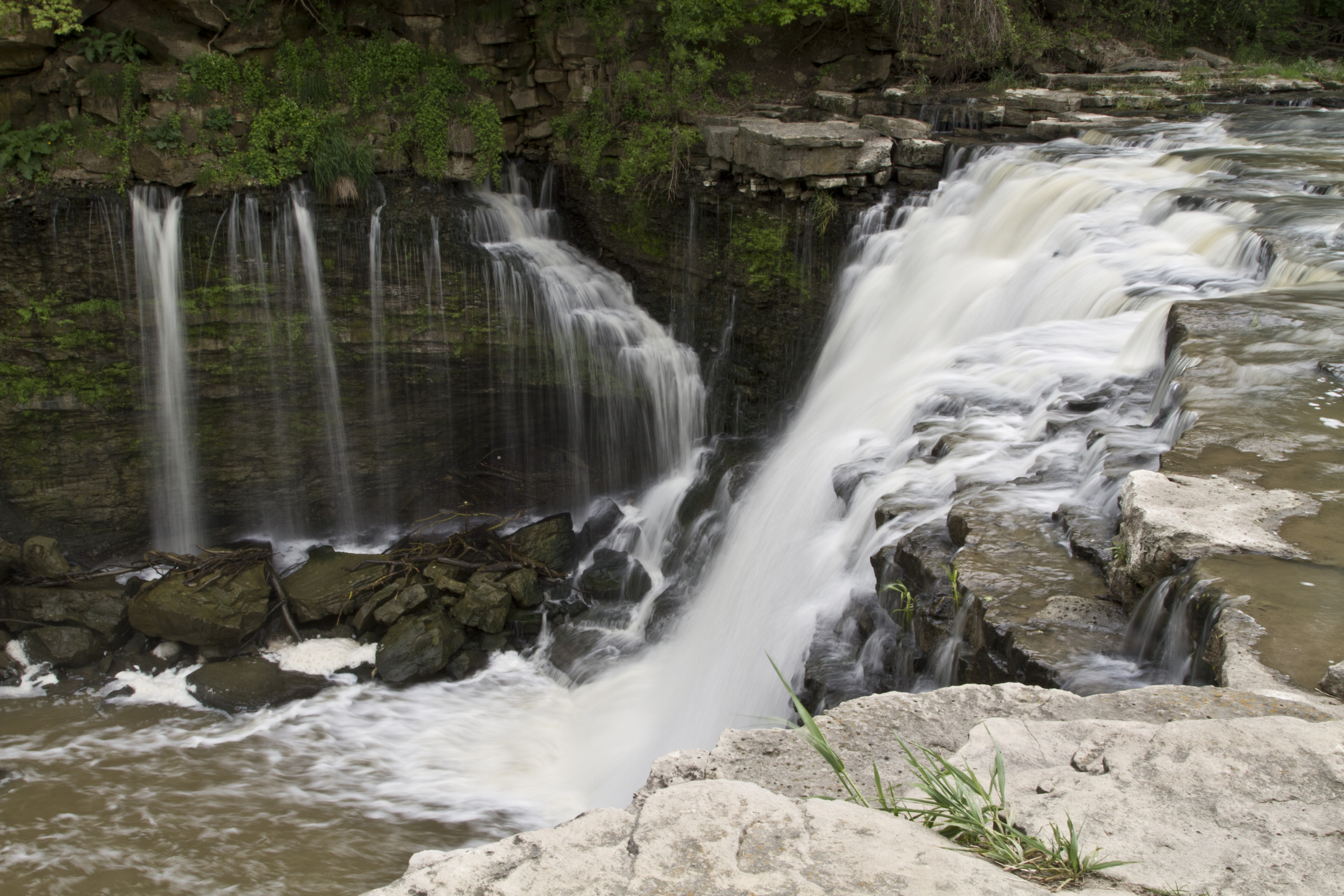

HGS RESEARCH HIGHLIGHT – Impact of River Morphology on River–Groundwater Exchange in Braided River Systems
We're pleased to highlight this publication by Thomas Wöhling, Moritz Kraft and Antoine Di Ciacca, which investigates how flood-driven changes in braided river morphology influence river–groundwater exchange and aquifer recharge. Using HydroGeoSphere (HGS), the researchers developed fully coupled surface water–groundwater models of two braided river systems in New Zealand to isolate the effects of changing riverbed morphology before and after major flood events. The study demonstrates that morphological changes alone can significantly alter both recharge to shallow braidplain aquifers and subsequent recharge to regional groundwater systems.

Using a Hydraulic Mixing‑Cell to Characterize Surface Water – Groundwater Interactions in Snow‑Dominated Catchments - Aquanty Webinar
We’re pleased to share the recording of our recent webinar, Using a Hydraulic Mixing-Cell to Characterize Surface Water–Groundwater Interactions in Snow-Dominated Catchments. This session, presented by Benjamin Frot, PhD Candidate at Laval University, explores how integrated hydrologic modelling and innovative post-processing techniques can improve our understanding of groundwater contributions to streamflow, water age, and climate change impacts in snow-dominated watersheds.

HGS RESEARCH HIGHLIGHT – Hybrid deep learning-numerical modeling framework for long-term prediction of groundwater discharge and radionuclide transport
We're pleased to highlight this publication by Minkyeong Seong and colleagues, which presents a hybrid deep learning–numerical modelling framework for improving long-term predictions of groundwater discharge and radionuclide transport. Using HydroGeoSphere (HGS) as the physics-based reference model, the researchers combined process-based numerical modelling with a graph convolutional long short-term memory (GC-LSTM) deep learning model to achieve highly accurate long-term predictions while dramatically reducing computational costs.
Long-term prediction of groundwater flow and radionuclide transport is essential for evaluating the safety of deep geological repositories used to store radioactive waste. While fully integrated numerical models such as HydroGeoSphere provide highly accurate simulations of coupled surface water, groundwater, and contaminant transport processes, these simulations can become computationally demanding for assessments spanning decades or even millions of years. Simpler models offer faster runtimes but often sacrifice accuracy by neglecting important processes such as unsaturated flow. This study addresses that challenge by combining the strengths of physics-based modelling with artificial intelligence to improve both efficiency and predictive performance.

NEW version of HGS PREMIUM September 2026 (REVISION 3010)
The HydroGeoSphere September 2026 release is now available for download.

Staff Research Highlight - Water Balance and Flow Tracer Application Using a Fully Integrated Hydrologic Model in a Pilot-scale Oil Sands Pit Lake Catchment
We're pleased to highlight this new publication by Aquanty staff, including Arghavan Tafvizi, James Ehrman, Ali Sharifinejad, Diana Zhang, Michael Callaghan, Steven Berg and Killian Miller, along with our collaborators at Suncor Energy Mike Wang, and Xiaoying Fan. This paper demonstrates the use of HydroGeoSphere (HGS) and the Hydraulic Mixing Cell (HMC) method to better understand water movement within a constructed end pit lake watershed. Using the Lake Miwasin Watershed in northern Alberta as a pilot-scale study site, the researchers developed and calibrated an integrated hydrologic model to simulate surface water, groundwater, lake levels, and evapotranspiration, while using HMC to identify how different areas of the watershed contribute to lake inflow under changing seasonal and climatic conditions.

MFGA Press Release - Healthy Grasslands Are Major Key to Future Ground Water Challenges and Climate Resilience
The Manitoba Forage and Grassland Association (MFGA) has released findings from a recent study with Aquanty examining how climate change could affect water resources and agricultural landscapes in southern Manitoba through 2050 and 2100.
The study, supported through Manitoba Environment and Climate Change Climate Action Funding, used the MFGA Aquanty Model to examine future climate conditions across three previously modelled watersheds: Pembina Valley, Swan Lake, and Oak River. The results highlight the increasingly important role that healthy grasslands and groundwater recharge could play in helping agricultural landscapes build resilience to future climate conditions.

HGS RESEARCH HIGHLIGHT – Three‐Dimensional Analysis of Heat Tracer Transport With High‐Resolution Subsurface Heterogeneity Characterization in a Complex Aquifer System
We're pleased to highlight this publication by Chenxi Wang and colleagues, co-authored by Aquanty's Steven Berg and Hyoun-Tae Hwang, which investigates how high-resolution characterization of subsurface heterogeneity can improve predictions of heat tracer transport in complex aquifer systems. The study leverages HydroGeoSphere (HGS) to simulate three-dimensional groundwater flow and heat transport, evaluating how different methods of representing hydraulic conductivity influence the ability to reproduce observed tracer behaviour in highly heterogeneous glaciofluvial deposits.
NEW version of HGS PREMIUM August 2026 (REVISION 3002)
The HydroGeoSphere August 2026 release is now available for download.

HGS RESEARCH HIGHLIGHT – Modeling E. coli fate and transport in and around a cattle pond
We're pleased to highlight this publication by Alexander Yakirevich and colleagues, which explores the fate and transport of Escherichia coli (E. coli) in and around a cattle pond using HydroGeoSphere (HGS). The study presents a fully integrated surface water–groundwater model that simulates watershed-scale hydrology alongside microbial transport, providing new insight into how livestock activities influence water quality in agricultural watersheds.

Delta-Models for Reservoir Operations – NORTH SASKATCHEWAN RIVER AT WHIRLPOOL POINT (05DA009)
The Bighorn dam is located in the foothills of the Canadian Rockies in Alberta and is one of TransAlta's major hydroelectric facilities, with a capacity of 120 MW and an average annual generation of approximately 408,000 MWh (Bighorn - TransAlta). Reservoir planning is important for hydropower operations because operators must balance water availability, storage constraints, generation demand, flood risk, and downstream flow requirements. In snowmelt dominated basins (like this one), reservoir inflow relies on both current streamflow and upstream watershed conditions which determine future water volumes over coming days, weeks, and months. These conditions include the amount of water stored as snowpack, the timing/rate of snowmelt, antecedent soil wetness, incoming precipitation, and changes in temperature.